

Catholic beliefs are rooted in Jesus Christ and the teachings He entrusted to His Church. For more than 2,000 years, the Catholic Church has proclaimed the Gospel and handed on the faith through Sacred Scripture and Sacred Tradition. At the heart of Catholic belief is the Holy Trinity—one God in three Persons: Father, Son, and Holy Spirit—and the belief that Jesus Christ, truly God and truly man, came into the world for our salvation.
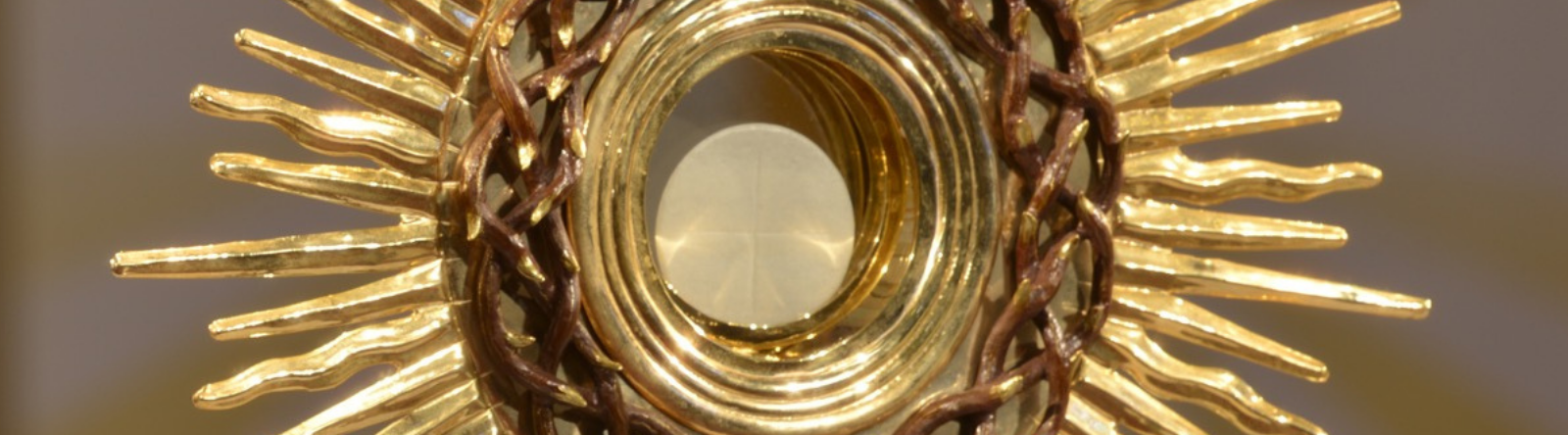
Catholics believe that Christ remains present and active in His Church, especially through the Seven Sacraments: Baptism, Confirmation, the Eucharist, Reconciliation, Anointing of the Sick, Holy Orders, and Matrimony. At the center of Catholic life is the Eucharist, in which Catholics believe that Jesus Christ is truly present—Body, Blood, Soul, and Divinity.
Catholics are called to develop a personal relationship with God through prayer, participation in the Sacraments, reading Sacred Scripture, and lives of love and service. We strive to follow Christ's command to love God and our neighbor, care for those in need, respect the dignity of every human person, forgive one another, and bring the light of Christ into our families and communities.
Catholics also honor the Blessed Virgin Mary and the saints as examples of faithful discipleship and ask for their prayers, just as we ask family and friends to pray for us. Above all, Catholicism is centered on Jesus Christ and the hope of eternal life made possible through His Passion, Death, and Resurrection.
Whether you are Catholic, returning to the Church, or simply curious about what Catholics believe, we invite you to learn more, ask questions, and discover the beauty and richness of the Catholic faith.
The Catholic Church was founded by the person and mission of Jesus Christ. The word “Catholic” means universal. Today’s Church is truly universal – it is the largest in the world with more than 1 billion members around the globe.
The mission of the Church is to spread the gospel message, administer sacraments and reach out with charity and justice to people in need. The Church is led by the Pope, who is the successor of the Apostle Peter, and the Bishops, who are also in the line of apostolic succession.
We recite our Catholic beliefs in the Nicene Creed each Sunday at Mass.
The Nicene Creed
I believe in one God,
the Father almighty,
maker of heaven and earth,
of all things visible and invisible.
I believe in one Lord Jesus Christ,
the Only Begotten Son of God,
born of the Father before all ages.
God from God, Light from Light,
true God from true God,
begotten, not made, consubstantial with the Father;
through him all things were made.
For us men and for our salvation
he came down from heaven,
and by the Holy Spirit was incarnate of the Virgin Mary,
and became man.
For our sake he was crucified under Pontius Pilate,
he suffered death and was buried,
and rose again on the third day
in accordance with the Scriptures.
He ascended into heaven
and is seated at the right hand of the Father.
He will come again in glory
to judge the living and the dead
and his kingdom will have no end.
I believe in the Holy Spirit, the Lord, the giver of life,
who proceeds from the Father and the Son,
who with the Father and Son is adored and glorified,
who has spoken through the prophets.
I believe in one, holy, catholic and apostolic Church.
I confess one Baptism for the forgiveness of sins
and I look forward to the resurrection of the dead
and the life of the world to come. Amen.
The Church is comprised of all believers or the People of God. Ordained clergy have a distinct role and function in the Church; all of the baptized are a part of the whole of the Body of Christ. Together with ordained ministers, the lay faithful are called to live out their baptism through spreading the gospel message and ministering to people in need.
The entire body of the faithful, anointed as they are by the Holy One, cannot err in matters of belief. They manifest this special property by means of the whole peoples' supernatural discernment in matters of faith when ‘from the Bishops down to the last of the lay faithful,’ they show universal agreement in matters of faith and morals. That discernment in matters of faith is aroused and sustained by the Spirit of truth. (Lumen Gentium #12)
|
The 7 Corporal Works of Mercy
|
The 7 Spiritual Works of Mercy
|
The 3 Theological Virtues
|
|
The 4 Cardinal Virtues
|
Fruits of the Holy Spirit
|
Four Marks of the Catholic Church
|
|
Precepts of the Church
|
The 7 Last Words of Christ
|
The 14 Stations of the Cross
|
|
The 8 Beatitudes These are teachings of Jesus during the Sermon on the Mount in which he describes the attitudes and actions that should characterize his disciples and followers. They can be seen as blueprints for living an authentic Christian life.
|
The 2 Greatest Commandments When asked which was the greatest of the commandments, Jesus responded with two. In this teaching of Jesus, these commandments complement each other and cannot be seen as existing apart from the other. The first is to love the Lord thy God with all thy YOUR heart, soul, mind and strength and the second is to love your neighbor as yourself. |
The Ten Commandments The Ten Commandments are more than simply rules and laws. They are a foundation of moral teaching and shape our obligations as Christians in relationship to God. The Ten Commandments were given to Moses by God on Mt. Sinai after being rescued by God from slavery in Egypt. These Commandments are the expression and sign of the Covenant between God and God’s people and are just as powerful and binding as they were when they were written.
|
The Pope
As Vicar of Jesus Christ, the Pope governs the Catholic Church as its supreme head. The Pope, as Bishop of Rome, is the chief pastor and shepherd of the whole Church. We believe that the Pope is the successor of Peter, and his bishops are successors of the Twelve Apostles.
It is clear throughout that it is a question of the bishops acting in conjunction with their head, never of the bishops acting independently of the Pope. In the latter instance, without the action of the head, the bishops are not able to act as a College: this is clear from the concept of "College." This hierarchical communion of all the bishops with the Supreme Pontiff is certainly firmly established in Tradition. (Lumen Gentium, Note of Explanation)
In the Acts of the Apostles, we come to know Peter is the head of the early church. When Peter is given the “keys to the kingdom,” Christ is establishing the divine office of leadership over the church. The permanence of the office of the Pope is essential to the everlasting nature of the church.
"The Roman Pontiff, head of the college of bishops, enjoys this infallibility in virtue of his office, when, as supreme pastor and teacher of all the faithful – who confirms his brethren in the faith – he proclaims by a definitive act a doctrine pertaining to faith or morals…The infallibility promised to the Church is also present in the body of bishops when, together with Peter's successor, they exercise the supreme Magisterium," above all in an Ecumenical Council. When the Church through its supreme Magisterium proposes a doctrine "for belief as being divinely revealed," and as the teaching of Christ, the definitions "must be adhered to with the obedience of faith." This infallibility extends as far as the deposit of divine Revelation itself. (CCC 891)
Divine assistance is also given to the successors of the apostles, teaching in communion with the successor of Peter, and, in a particular way, to the bishop of Rome, pastor of the whole Church, when, without arriving at an infallible definition and without pronouncing in a "definitive manner," they propose in the exercise of the ordinary Magisterium a teaching that leads to better understanding of Revelation in matters of faith and morals. To this ordinary teaching the faithful "are to adhere to it with religious assent" which, though distinct from the assent of faith, is nonetheless an extension of it. (CCC 892)
Christian Unity
Unity is essential for the followers of Jesus. John’s gospel reminds us, “The glory which You have given Me I have given to them, that they may be one, just as We are one; I in them and You in Me, that they may be perfected in unity, so that the world may know that You sent Me, and loved them, even as You have loved Me.” (John 17:22-23)
The Catholic Church is united under the leadership of the Bishop of Rome, the Pope. Historical breaks and schisms have left us fractured, with the Eastern Orthodox churches no longer in full unity with Roman Catholicism. Beginning with John XXIII and continuing through the papacy of John Paul II and our current pope, the movement to come together in full Christian unity has been underway.
The seasons of the Church follow one universal liturgical calendar. The order of the year is as follows:
- Advent
Advent marks the beginning of the liturgical calendar. It consists of the four Sundays leading up to Christmas. - Christmas
In the Catholic Church, Christmas is more than one day - it is a season that begins on Christmas Eve (Dec. 24), Continues through the Feast of the Epiphany and includes the Solemnity of Mary, Mother of God. Christmastide concludes with the Feast of the Baptism of the Lord in January. - Lent
The forty days of Lent is reminiscent of Jesus' forty days in the desert. Lent is a season of repentance and renewal in solidarity with those preparing for the Sacrament of Initiation to be received at Easter. Lent begins with Ash Wednesday and continues until the Mass of the Lord's Holy Supper on Holy Thursday. - Holy Week
Holy Week is the week before Easter Sunday, beginning with Palm Sunday and ending with Holy Saturday. Easter is not part of Holy Week, but rather the beginning of the Easter season of the Liturgical year. On Palm Sunday the Church celebrates the triumphant entry of our Lord, Jesus Christ, Into Jerusalem, riding a donkey, when the people laid palms before Him. To commemorate that day Palms are distributed to the faithful at Mass. The Triduum is the most important three days in the Liturgical year and it begins with Holy Thursday (commemorating the Last Supper,) followed by Good Friday (commemorating Jesus' crucifiction and his earth on the cross), and ending with the Easter Vigil, celebrated at night on Holy Saturday, and when the unbaptized receive the Sacraments of Initiation (Baptism, First Communion and Confirmation) and are welcomed into the Catholic Church. - Easter
Alleluia - He is Risen! On Easter Sunday the church celebrates Christ's resurrection from the dead and his victory over death. Christ's ascension into heaven is celebrated on the 7th Sunday after Easter. Eastertide concludes at Pentecost, where Jesus send the Holy Spirit upon the Apostles to spread the Gospel to all Nations. - Ordinary Time
The season of Ordinary Time explores Christ's mission and message through the Gospels. This season includes Trinity Sunday ( which celebrates God's self revelation as a Trinity of persons) and Corpus Christi (which celebrates the Body and Blood of Jesus in the Eucharist). Ordinary Times concludes with the Solemniity of Christ the King which brings the liturigical year to a close.
During the during the year, in addition to the Sunday worship, the Church also celebrates Solemnities, Feasts, and Memorials which may be on any day of the week. These occur during the year to commemorate special events or persons that are highly revered by the Catholic Church.
Prayer is communion with God. Prayer can be public or personal, spoken or silent. The psalms are prayers we sing; they have been a part of the Church’s communal prayer since the earliest days of the Church. Prayer is communication with a God who loves us and desires to be in relationship with us.
Jesus teaches us about the importance of prayer. The Gospels record seventeen times that Jesus took time apart to pray. In the Scriptures, Jesus prays often, morning and night. He prays during critical events in his life and he prays before ministering to people in need. Jesus is a model of prayer for us.
Prayer is essential to living a full, Catholic life. The central communal form of prayer for the Church is the Mass. Some of the Church’s most traditional and foundational prayers are as follows:
Grace before Meals
Bless us, O Lord, and these your gifts which we are about to receive from your goodness, through Christ our Lord. Amen.
Glory to the Father
Glory to the Father, and to the Son, and to the Holy Spirit: as it was in the beginning, is now, and will be forever. Amen.
The Lord’s Prayer
Our Father, who art in heaven, hallowed be thy name; thy kingdom come, thy will be done on earth as it is in Heaven. Give us this day our daily bread, and forgive us our trespasses, as we forgive those who trespass against us; and lead us not into temptation, but deliver us from evil. Amen.
Hail Mary
Hail, Mary, full of grace. The Lord is with you. Blessed are you among women; and blessed is the fruit of your womb, Jesus. Holy Mary, Mother of God, pray for us sinners, now and at the hour of our death. Amen.
Act of Contrition
My God, I am sorry for my sins with all my heart. In choosing to do wrong and failing to do good, I have sinned against you whom I should love above all things. I firmly intend, with your help, to do penance, to sin no more, and to avoid whatever leads me to sin. Our Savior Jesus Christ suffered and died for us. In his name, my God, have mercy.
Hail, Holy Queen
Hail, holy Queen, Mother of mercy, hail, our life, our sweetness, and our hope. To you we cry, the children of Eve; to you we send up our sighs, mourning and weeping in this land of exile. Turn, then, most gracious advocate, your eyes of mercy toward us; lead us home at last and show us the blessed fruit of your womb, Jesus: O clement, O loving, O sweet Virgin Mary.
Prayer for Priests
Gracious and loving God, we thank you for the gift of our priest. Through them, we experience your presence in the Sacraments. Help our priests to be strong in their vocation. Set their souls on fire with love for your people. Grant them the wisdom, understanding, and strength they need to follow in the footsteps of Jesus. Inspire them with the vision of your kingdom. Give them the words they need to spread the Gospel. Allow them to experience joy in their ministry. Help them to become instruments of your divine grace. We ask this through Jesus Christ, who lives and reigns as our eternal Priest. Amen.
There are also contemporary ways to pray. Talking with God each day, no matter the form or words used, nourishes our relationship and helps it to grow.
- Silent prayer or meditation helps us center our thoughts on God’s goodness and offers renewal in a noisy, hectic world.
- Lectio Divina is a way of praying with the sacred Scriptures. Find a Scripture passage that speaks to you. Read it out loud and then reflect upon it silently for several minutes. Read it again. Notice any words or phrases that stick with you. Ask God what you are to learn from this passage. Listen.
- Keep a prayer journal with all of your wants, needs, thoughts and reflections related to your prayer life.